



What Does ₹13 Crore Buy You in Retirement? Inside India's Luxury Senior Living Boom
Follow Us On:


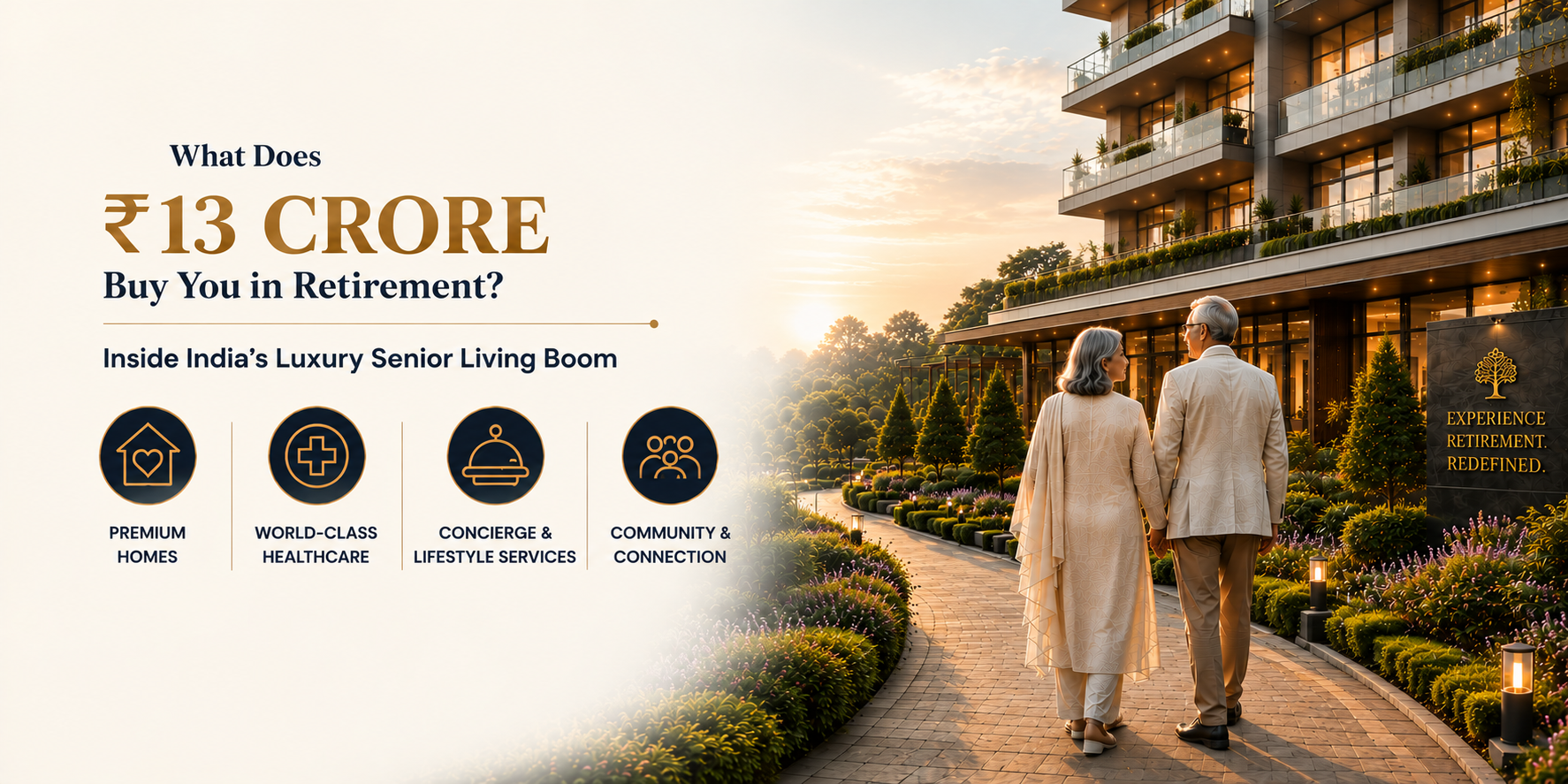
What Does ₹13 Crore Buy You in Retirement? Inside India's Luxury Senior Living Boom
The most expensive real estate decision an Indian family makes isn't their first home, but probably their last one. Across Gurugram, Dehradun, and Pune, development in real estate specifically catering to the Indian HNI seniors is much-favoured in a market that's compounding at roughly 26% a year.
The Numbers Behind the Boom
India's broader senior living market was valued at USD 3.55 billion in 2025 and is projected to reach USD 14.14 billion by 2031, a compound annual growth rate of nearly 26%. Luxury is the smaller, faster-moving slice of that pie. As per the industry estimates, the wealthiest cohort appears to be in age range of 60-69 years, holding nearly 25.8% of the share; a modest percentage of a very large base, which is exactly what makes this segment interesting to developers chasing margin rather than volume.
Who's Actually Buying
Two buyer profiles dominate: affluent urban Indians (former corporate leaders, business owners, professionals) seeking an active, secure retirement, and NRI families purchasing premium, fully managed housing for parents back in India, typically bundled with strong healthcare and concierge services. Most buyers fall between 55 and 70 years old, and ticket sizes range from ₹2 crore at the entry end to ₹15 crore-plus at the top.
Three Pricing Tiers, One Growing Ceiling
The luxury segment now splits into three distinct bands: • Upper-mid luxury (₹2–5 crore): 2–3 BHK or compact 4 BHK units from established brands, typically in Tier-1 or strong Tier-2 cities. • Premium/flagship luxury (₹5–10 crore): Larger 3–4 BHK or combined units from developers like Antara and Ashiana, concentrated in NCR, Mumbai, Pune, and Dehradun. • Ultra-luxury/institutional grade (₹10–15 crore-plus): 4 BHK-plus-staff-room configurations above 4,000 sq.ft, exemplified by Gurugram or Greater Noida townships, with some launches quoted from ₹11–12 crore onward. Per-square-foot rates track the same spread. Roughly ₹10,500–12,000/sq.ft in hill and Tier-2 locations like Dehradun, against ₹30,000-plus/sq.ft in ultra-premium NCR and Mumbai projects. Unit sizes have grown to match: 4 BHK and combined units now run 2,200 to 4,500-plus sq.ft, with some ultra-luxury layouts reaching 6,000 sq.ft, often built by merging two smaller units into one estate-style apartment.
Why the Ticket Size Holds Up
Luxury retirement homes are a different operating model altogether. Gated, low-density townships with on-site clinics, hospital tie-ups, 24x7 emergency response, and high staff-to-resident ratios justify the premium, as do the clubhouses, curated social calendars, and concierge services layered on top. For developers, the appeal goes beyond the sale price: monthly charges of ₹33,000 to over ₹1,06,000 for care, meals, and amenities create recurring, annuity-like revenue on top of the initial ticket.
The Bottom Line
Curious how a luxury senior living asset performs for your or your parents? Reach out to our advisory team for a city-by-city breakdown of pricing, developers, and what to actually underwrite before you sign.